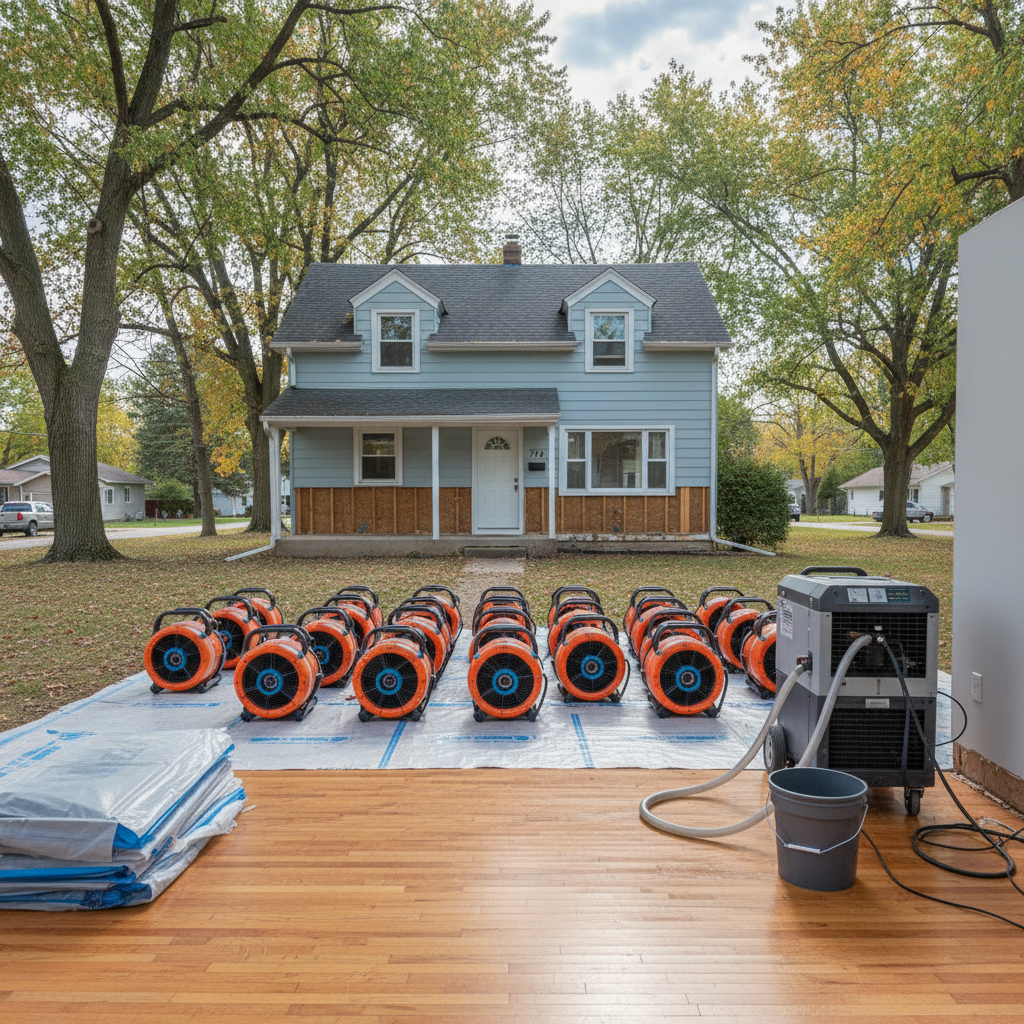
So, you've got water damage. Maybe it's a burst pipe, a leaky roof, or a sump pump failure after one of our heavy spring rains. Your first thought is probably, "Get it dry!" And you're right, that's crucial. But getting it dry the right way? That's a whole different ballgame. I've been doing this restoration work for years here in Three Rivers, and I've seen folks make some common—and often expensive—mistakes when they're trying to tackle structural drying or hire someone for the job.
Mistake #1: Thinking "Dry" Means "Dry Enough"
This is probably the biggest one. You mop up the standing water, run a few fans, and everything looks and feels dry. So you figure you're good, right? Nope. What you can't see is the moisture that's wicked into your drywall, your subfloor, your insulation, or even behind your baseboards. That hidden moisture is a ticking time bomb for mold growth and further structural damage. I've walked into homes in the older parts of town, down near the St. Joseph River, where folks thought they'd handled a small flood themselves, only to find black mold blooming a few weeks later. You need professional equipment to measure moisture levels in building materials, not just rely on how it feels to the touch.
Mistake #2: Hiring the Cheapest Bid Without Asking Questions
Look, I get it. Nobody wants to spend more than they have to. But when it comes to structural drying, the cheapest bid can often end up being the most expensive in the long run. Some companies might give you a low price because they're cutting corners. They might not have enough drying equipment, or they might not leave it long enough, or maybe they aren't properly trained in psychrometry (that's the science of drying, by the way). Before you sign anything, ask:
- What certifications do your technicians have (IICRC is the gold standard)?
- What kind of drying equipment do you use (air movers, dehumidifiers, specialty drying equipment)?
- How do you monitor the drying process (moisture meters, thermal imaging)?
- What's your plan for preventing mold?
If they can't answer these questions clearly, or if they seem to just want to throw some fans in and leave, that's a huge red flag. You want someone who's going to explain the process, not just give you a number.
Mistake #3: Not Understanding Your Insurance Coverage
This isn't directly about the drying process itself, but it's a huge planning mistake. Many homeowners don't fully understand what their homeowner's insurance policy covers when it comes to water damage. Some policies specifically exclude things like sump pump failures or slow leaks. Others have different deductibles for different types of water damage. Before any work starts, or as soon as possible, call your insurance company. Understand your coverage. A reputable restoration company, like us at Neighborly Restoration Solutions, will help you through the insurance claim process, but you need to do your homework on your policy first. Knowing what's covered can save you a lot of stress and unexpected costs down the line.
Mistake #4: Delaying the Start of Drying
Time is absolutely critical when you're dealing with water damage. Mold can start to grow within 24-48 hours if conditions are right. The longer water sits, or the longer materials stay wet, the more extensive and expensive the damage becomes. I've seen folks try to wait a few days to see if it dries out on its own, especially in our humid Michigan summers. That's a gamble you really don't want to take. Get professional help on site as quickly as possible. Every hour counts.
Mistake #5: Not Considering the Source of the Water
It sounds obvious, but you'd be surprised. Sometimes people focus so much on drying the visible water that they don't ensure the source of the water has been completely fixed. What's the point of drying out your basement if the leaky foundation crack that let the water in during a heavy rainstorm hasn't been addressed? Or if the slow drip under the sink is still dripping? A good restoration company will always advise you to fix the source of the water first, or at least concurrently with the drying process, to prevent future issues. We're not just here to clean up the mess; we want to make sure it doesn't happen again.
Structural drying isn't just about fans and dehumidifiers; it's a science. Don't let a water incident turn into a bigger problem because of these common mistakes. Do your homework, ask the right questions, and act fast. It'll save you a lot of headache and money in the long run.