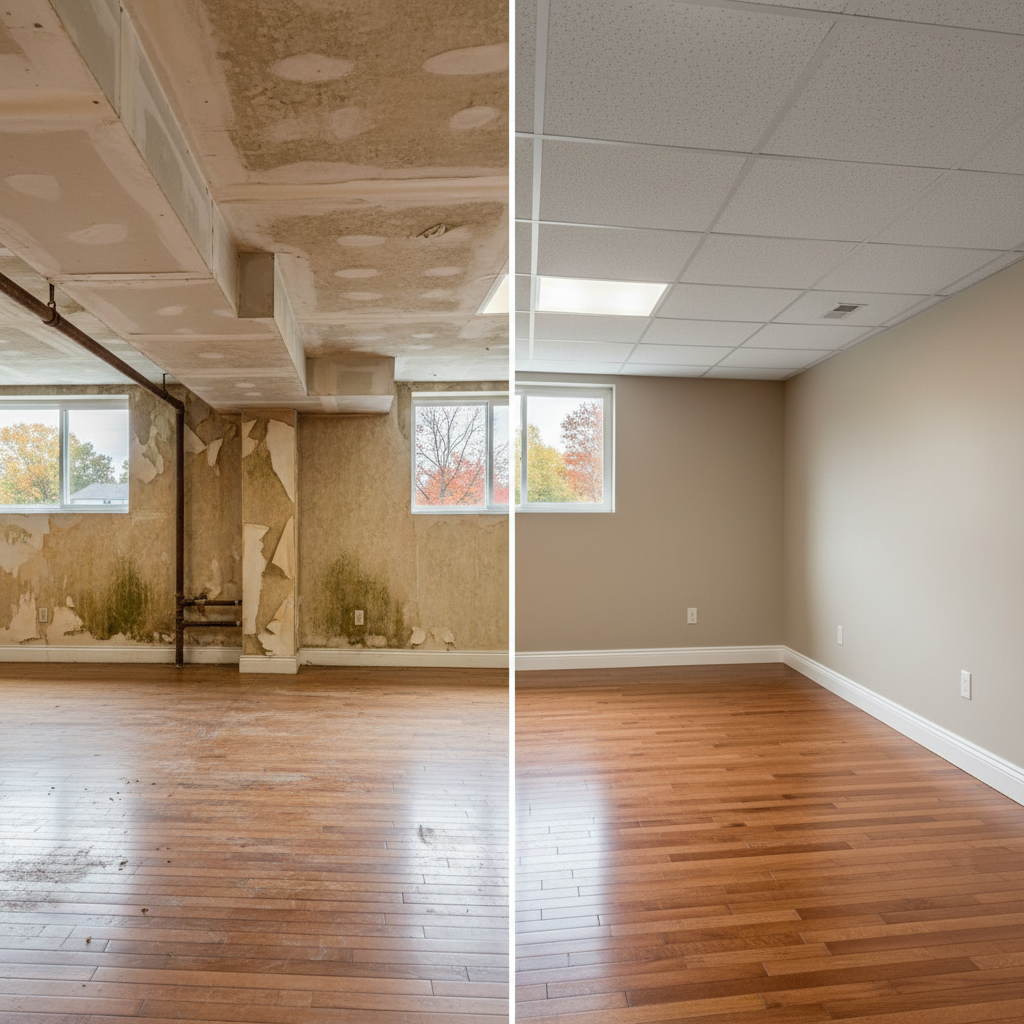
Alright, let's talk about something nobody wants to deal with: a flooded basement or living space. It's a nightmare, I know. But once the water's out and the initial shock wears off, you're faced with a big decision: do you try to save what's there, or rip it all out and start fresh? This isn't just about what looks good; it's about what's going to last, what's safe, and what makes financial sense in the long run, especially with our Michigan weather patterns.
Repairing Flood-Damaged Materials: The 'Save What You Can' Approach
When I talk about repairing, I mean drying out, cleaning, sanitizing, and trying to restore materials like drywall, insulation, or flooring that have been affected by water. This can seem like the quicker, cheaper option upfront, and sometimes it is. If you've had a clean water overflow – say, a burst pipe from a clean water supply – and you catch it fast, within 24-48 hours, you might be able to dry things out thoroughly, sanitize, and avoid major tear-out. We've done it for folks in older homes near the St. Joseph River where they've had a small, contained leak.
- Cost: Generally lower initial cost. You're paying for drying equipment, cleaning, and maybe some minor patching.
- Durability: This is where it gets tricky. If materials like drywall or insulation get saturated, even if they look dry on the surface, they can harbor mold. Wood subfloors can warp or rot over time. The structural integrity might be compromised, even if it's not immediately obvious. You might fix it now, only to have bigger problems down the road.
- Maintenance: You'll need to be extra vigilant for mold growth, musty smells, or structural issues in the months and years following. It's a constant worry.
- Appearance: You might get away with it looking good initially, but sometimes you'll see staining, warping, or bubbling that just doesn't go away. It's hard to get things back to 'like new' if they've been truly soaked.
Replacing Flood-Damaged Materials: The 'Start Fresh' Approach
This is where you're tearing out everything that got wet – drywall, insulation, flooring, baseboards, sometimes even studs if they're compromised. It feels drastic, and it's definitely more work upfront. But in my experience, especially with anything beyond a small, clean water spill, this is almost always the better long-term solution for homeowners in Three Rivers.
- Cost: Higher initial investment. You're paying for demolition, disposal, and all new materials and installation. It's a bigger project.
- Durability: This is where replacement shines. You're removing all compromised materials, treating the area for mold prevention, and installing fresh, clean materials. You get a clean slate, and you know there aren't any hidden issues waiting to pop up. This means peace of mind, which is worth a lot.
- Maintenance: Once it's done right, your maintenance is back to normal. No need to constantly check for mold or structural issues related to the flood.
- Appearance: It's new. It looks new, smells new, and feels new. You can even take the opportunity to upgrade materials or change the aesthetic.
My Recommendation for Three Rivers Homeowners
Look, I've seen a lot of flooded basements and homes around here. From the older places downtown with their stone foundations to the newer builds out towards Corey Lake. Our Michigan climate means we get our fair share of wet conditions, and frankly, trying to salvage water-logged materials often leads to headaches later on. Mold is a real concern, and it can be a health hazard. It's sneaky, and it can grow behind walls or under floors where you can't see it.
Unless it's a very minor, clean water incident that's dried out immediately, my honest recommendation is to replace. It's the more thorough, durable, and ultimately safer option. You're investing in your home's long-term health and your family's well-being. It might seem like a bigger bite out of your wallet now, but it saves you from potential secondary damage, health issues, and even more costly repairs down the road.
When we at Neighborly Restoration Solutions come out for a flood restoration job, we're not just looking at what's visible. We're assessing the full extent of the damage, including potential hidden moisture and mold. We'll give you an honest assessment and walk you through why replacement is usually the best path forward to ensure your home is truly restored, not just patched up. Don't cut corners when it comes to water damage; it's just not worth the risk.