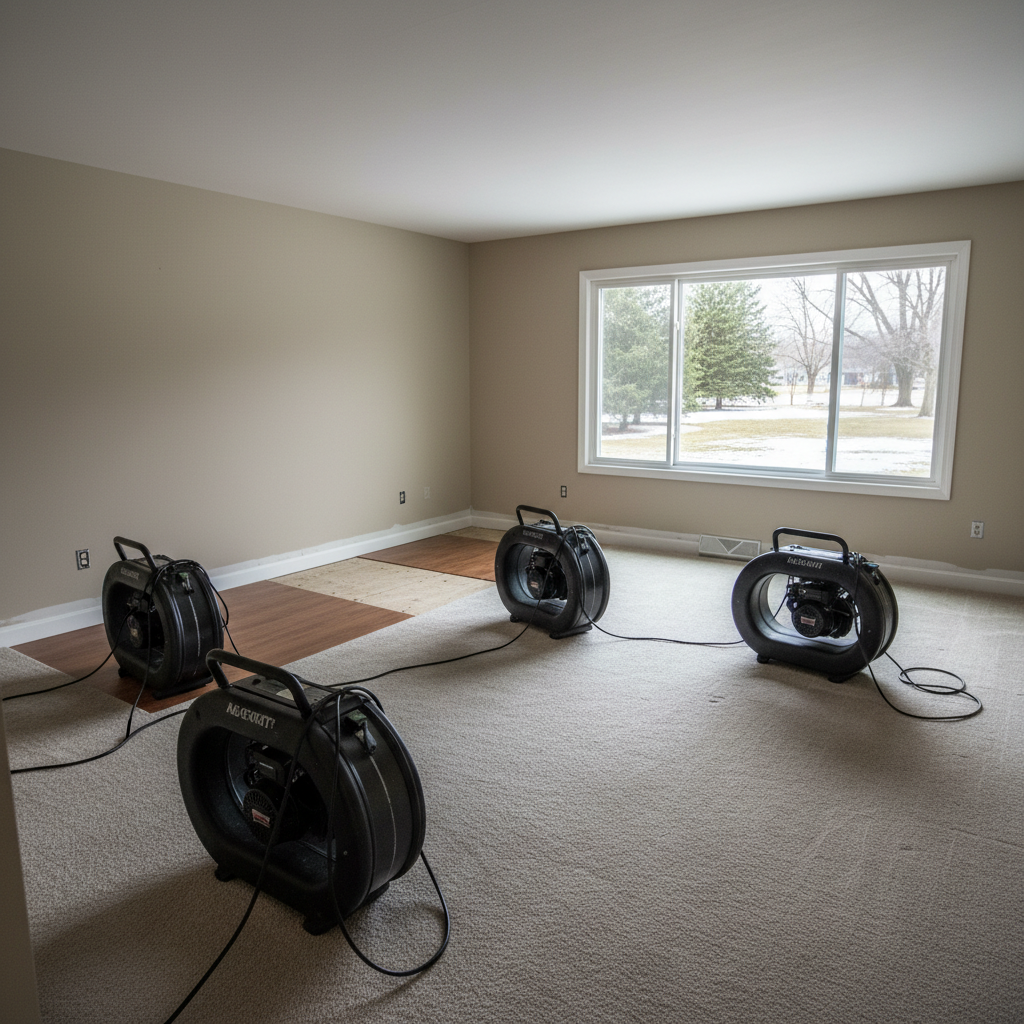
So, you've had some water trouble in your home. Maybe a pipe burst, the sump pump failed, or heavy rains pushed water into your basement. Whatever it was, getting the water out is just the first step. The real work, and often the most critical part, is getting everything properly dried out. And around here in Three Rivers, our Michigan weather plays a huge role in how that process goes.
Timing Your Drying: When's Best?
Honestly, when you've got water damage, there's no 'best time' to deal with it – you need to act fast, no matter the season. But knowing what to expect from the weather can help you understand the process better and manage expectations. If you're dealing with a slow leak or a smaller, contained issue, you might have a tiny bit more flexibility, but generally, speed is key.
For instance, if it's the dead of winter, say January or February, and it's 10 degrees outside with low humidity, that's actually pretty good for drying. We can bring in our specialized dehumidifiers and heaters, and the dry, cold air outside helps pull moisture out of the house when we ventilate. It's counterintuitive, I know, but that dry winter air is a friend to structural drying.
Now, if it's July or August, and it's 90 degrees with 90% humidity, that's a whole different ballgame. We're fighting the outside air constantly. We'll still get it dry, don't get me wrong, but it might take a bit more equipment and a little longer. We've got to seal things up tighter and really push that moisture out with our commercial-grade gear. You can't just open windows and expect things to dry out when the air outside is practically soup.
Local Weather Conditions & Drying Time
Here in Three Rivers, we get a pretty good mix of everything. We've got those brutal, dry winters and those sticky, humid summers. We also get our fair share of spring thaws and heavy fall rains, which can lead to water issues in the first place.
- Winter (December - March): Generally good for drying. The air is cold and dry. We can use that to our advantage. If we're drying a basement, especially in an older home in, say, the Fisher Lake area, where basements can be a bit damp anyway, the dry winter air helps us get things bone dry.
- Spring (April - May): Can be tricky. We get a lot of rain, and humidity starts to climb. Plus, the ground is often saturated, which can make things tough if you've got foundation issues.
- Summer (June - August): The most challenging time for drying. High heat and high humidity mean we're working overtime to extract moisture. We rely heavily on powerful dehumidifiers and air movers to create an ideal drying environment indoors, regardless of what Mother Nature is doing outside.
- Fall (September - November): Can be a mixed bag. Early fall can still be humid, but as we get closer to winter, the air gets drier. It's often a decent time for drying, similar to late spring.
What does this mean for you? It means when Neighborly Restoration Solutions comes in, we're not just throwing fans at the problem. We're assessing the conditions, measuring moisture levels, and choosing the right equipment for the specific weather we're dealing with. We're basically creating a controlled micro-climate inside your house to get it dry, no matter what's happening outside.
Protecting Your Investment Year-Round
Once we've dried everything out and repaired the damage, you want to keep it that way, right? Here are a few year-round tips to protect your home and prevent future water headaches:
- Keep an Eye on Your Gutters: Make sure they're clean and draining away from your foundation. This is huge, especially during those heavy spring and fall rains we get.
- Check Your Sump Pump: If you have one, test it regularly. A few buckets of water in the pit will tell you if it's working. Consider a battery backup, especially if you're in an area prone to power outages.
- Monitor Humidity Indoors: Especially in your basement. A simple hygrometer can tell you if it's getting too damp. Aim for under 60% relative humidity. If it's consistently higher, a dehumidifier can be a good investment.
- Insulate Pipes: In unheated areas like crawl spaces or attics. Those Michigan winters can be brutal, and frozen pipes are a common cause of water damage.
- Regular Appliance Checks: Look for leaks around your washing machine hoses, dishwasher, and refrigerator. A small drip today can be a big problem tomorrow.
Look, water damage is a pain, plain and simple. But understanding how our local climate impacts the drying process can help you feel more in control. And when you need help, you know who to call. We're here to get your home dry and back to normal, no matter the season.